
A real-estate platform that stopped acting like a social network

Houmify connected two sides of a real-estate transaction, agents and specialists on one side, buyers, sellers, and renters on the other, in a market where the client typically pays a significant fee to whoever they choose. The platform had been built with a social-networking mindset: put people in front of each other and let them connect. That missed what actually mattered to a client paying that fee. finding the right agent, not just any agent.
Proximity and ad spend aren't the same as quality
In the traditional model, a client picks an agent based on whichever ad they saw nearby, with no visibility into that agent's track record, pricing, or whether a better match existed a few streets over. Agents, in turn, had to spend their time and budget competing for visibility instead of competing on the value they could actually offer. Houmify's first version tried to solve this by making agents and clients simply reachable to each other, a social-platform pattern that never addressed the actual mismatch between what a client needed and which agent could deliver it.
Turning access into eligibility, and a conversation into a shortcut
Before landing on the eligibility-and-competition model, the earlier approach was closer to a directory: agents visible to clients, filtered by category. That was the same open-access pattern Houmify had shipped with originally, just with better filters on top, and it didn't fix the actual problem: a client still couldn't tell which agent was the right one for their specific case. Once that was clear, I redesigned the core mechanic so an agent could only reach a client whose case matched their profile, and let multiple eligible agents compete for that client, including on price.
In phase two, the AI assistant became the main way less experienced users reached a match, a short conversation replaced the need to understand agent categories, real-estate terminology, and which type of professional actually fit their situation. Most of the real work here happened in the backend, in how the assistant's prompts were built, so it could correctly interpret a user's conversation, feed that back into training the model, and generate the right query against the database to surface a match, rather than just producing a plausible-sounding answer.
Loan calculators, fee estimators, and legal and tax updates stayed available from day one alongside the AI path, not gated behind a match. Keeping them free and accessible built trust and a sense of being informed, gamified engagement a little, and meant a user was more likely to explore the platform's other tools once they'd tried one. The AI assistant is still the priority on the landing page, but a user who came in through search already knows something about what they're looking for, and educational content plus calculators for each task are one click away through the site's other pages.
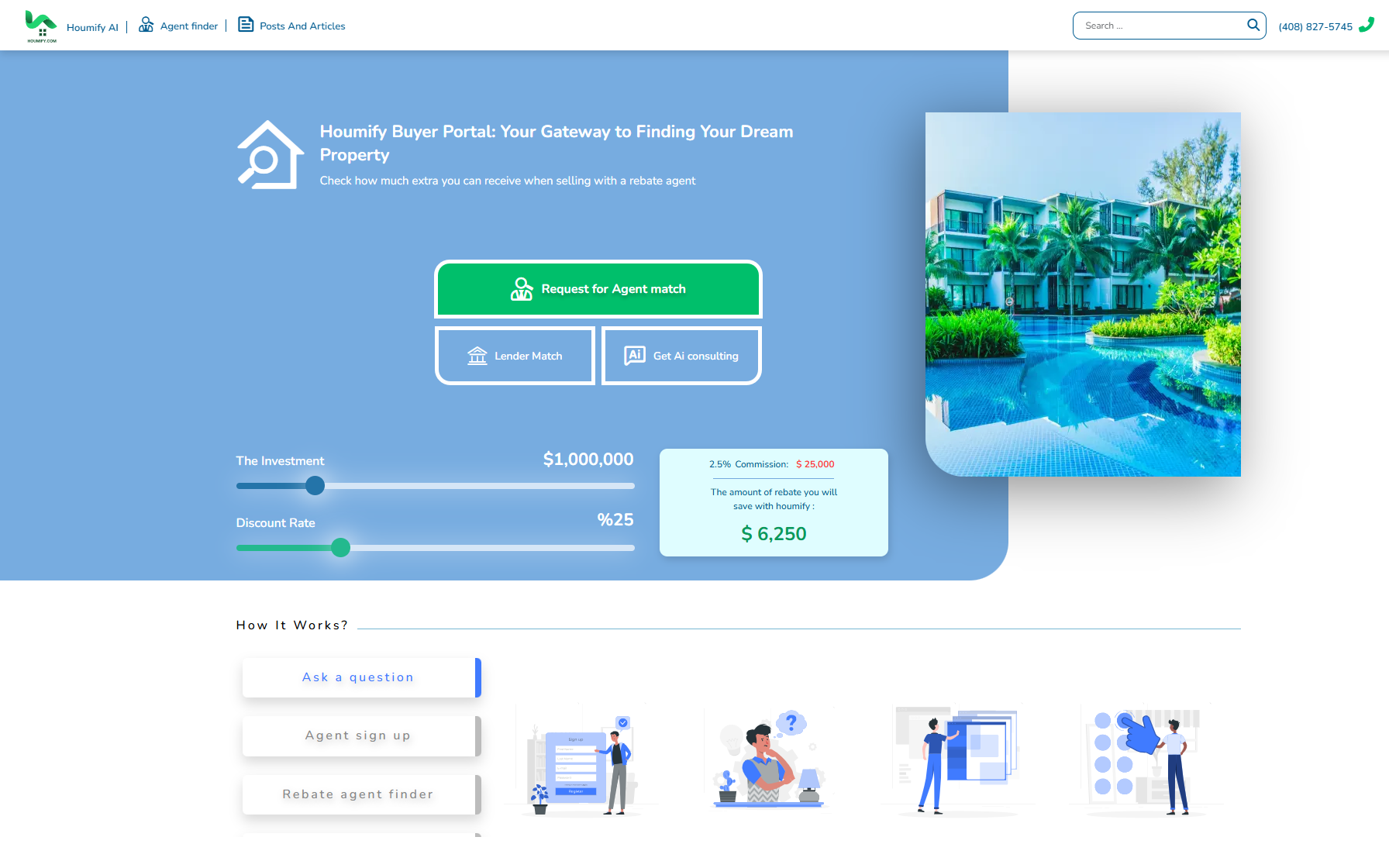 Calculator / CTA / How it works?
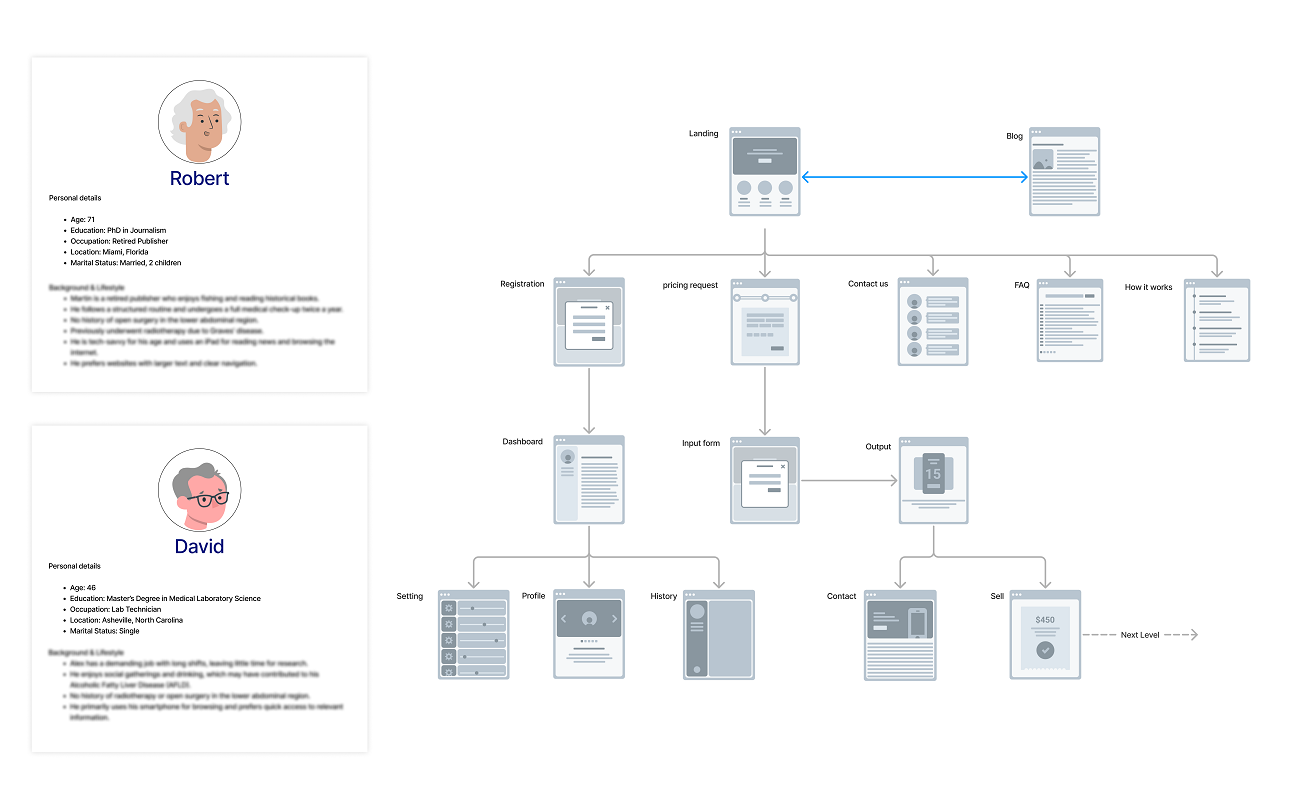 User Personas / Sitemap / User Flow
Where the trade‑offs actually happened
Replacing free-form connection with parameter-based eligibility turned the platform into an actual market, where an agent's access to a client depended on fit, not just presence.
A short conversation replaced the need to understand agent categories, real-estate terminology, and which type of professional actually fit a user's situation. Getting this right depended less on the interface and more on the backend, refining how the assistant's prompts interpreted a conversation, both to keep training the model and to generate the correct query against the database, rather than a confident-sounding guess.
Loan and fee calculators, plus state-level legal and tax updates, stayed free and available from day one instead of being held back until after a match. The trade-off wasn't withholding access, it was accepting that these tools would compete for attention with the AI assistant on a user's first visit; keeping them a click away through the site's other pages, rather than pushing them onto the landing page, protected the AI as the primary path while still letting an already-informed user reach them fast.
Loan conditions, agent pricing, and client profiles differ from state to state, not just the regulations around them. Surfacing state-specific tools and updates, rather than one generic national version, meant more engineering and content work per region, but users were consistently more satisfied seeing information relevant to exactly where they lived.
A matching market, with an AI shortcut for the parts people don't understand
The shipped platform matched clients to eligible agents based on transaction type, specialization, location, and language, and let qualified agents compete for the same client, including on discount. Users unfamiliar with real-estate processes could skip the category and filter logic entirely by talking to the AI assistant, which interpreted their situation and routed them directly to a matching agent. Loan cost calculators and state-specific legal and tax updates kept the platform useful well past the initial match.
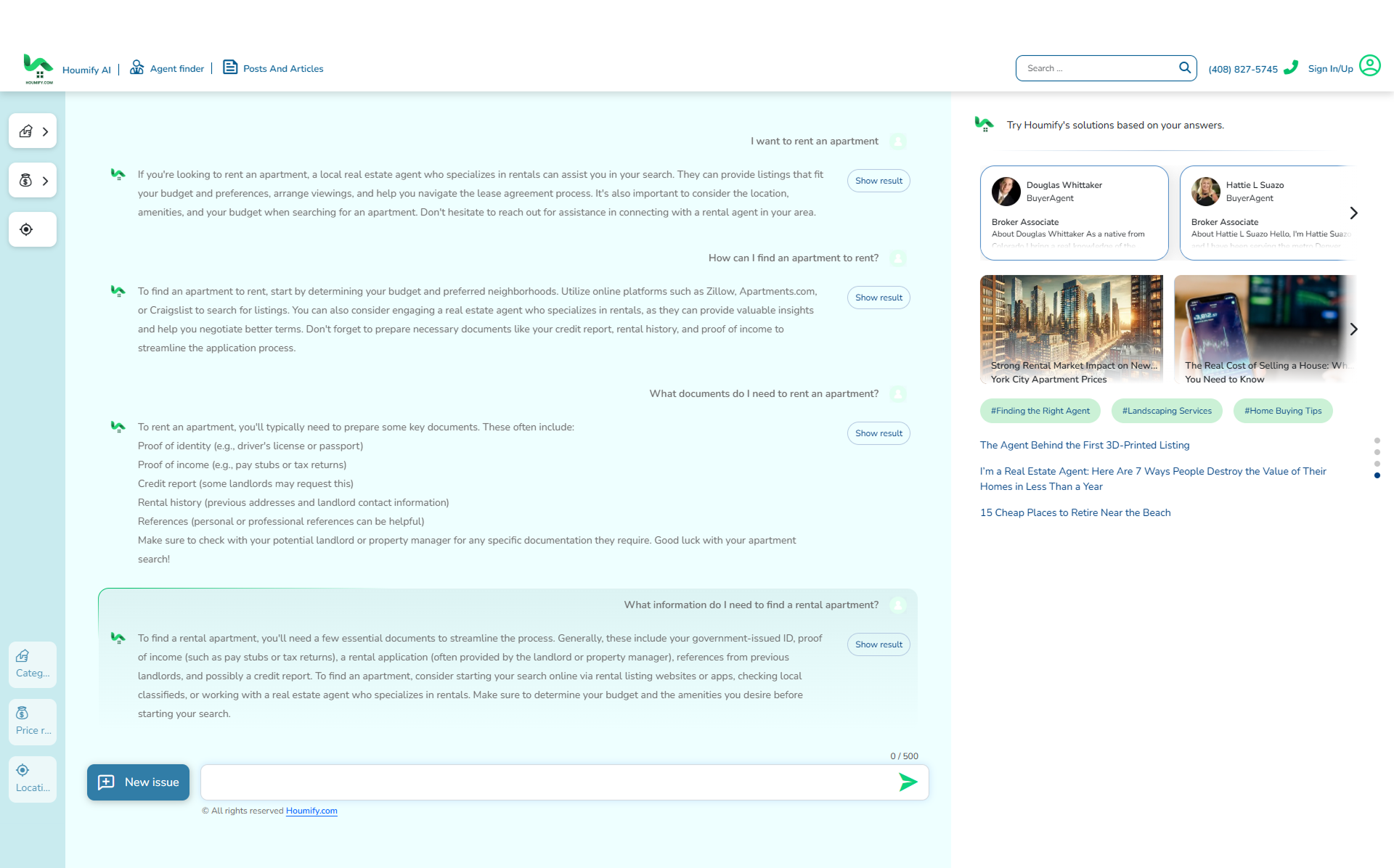 AI Assistant / Search / Agent Finder
What the redesign delivered
What's worth a second look
Redesigning the core mechanic from open access to competitive matching solved the main problem, but that same competitive layer adds pressure I didn't fully resolve, agents optimizing for discount to win a match can end up competing on price alone, which isn't always the same as the best outcome for the client.